
Transaction Screening vs. Transaction Monitoring: What is the Difference?
Transaction screening and transaction monitoring are distinct but complementary components of a robust Anti-Money Laundering (AML) compliance framework. While both are designed to identify potential financial crime risks, they serve fundamentally different purposes. Transaction screening assesses parties involved in a transaction against local and global sanctions lists, PEP databases, and other relevant watchlists, helping organizations to identify prohibited or high-risk counterparties. Transaction monitoring, on the other hand, analyses customer activity and transaction patterns to identify unusual or potentially suspicious behaviour. Depending on the monitoring framework, this analysis can take place in real time, near real time, or retrospectively across historical transactions, enabling institutions to detect both individual high-risk transactions and broader behavioural pattern.
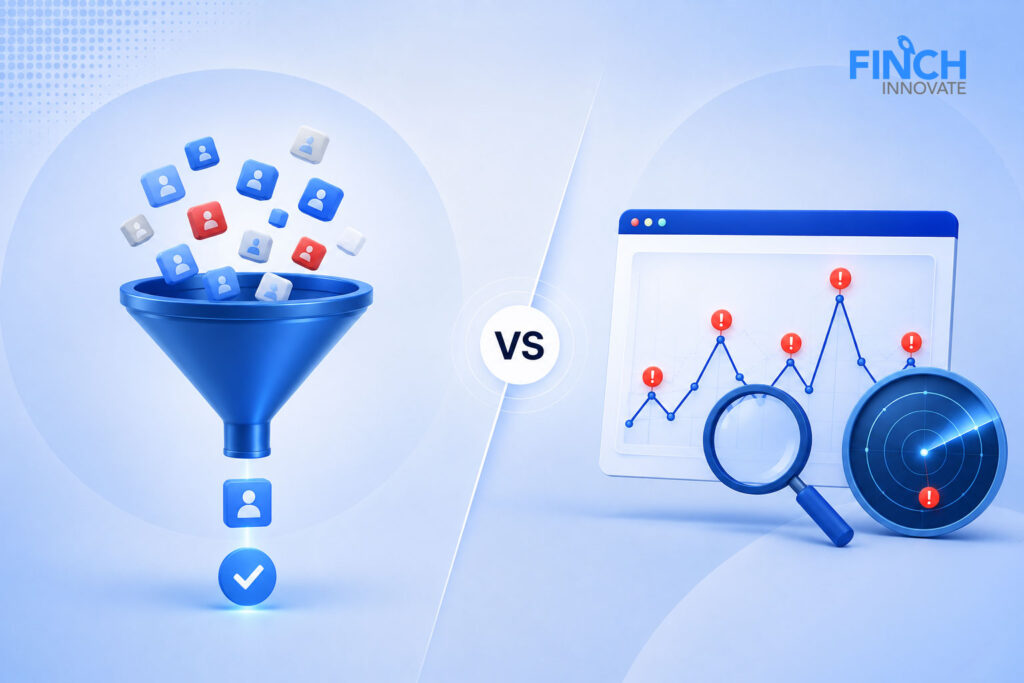
What Is Transaction Screening?
Transaction screening is primarily focused on who is involved in a transaction and whether the transaction involves a prohibited or sanctioned party.
When a payment is initiated, screening systems can examine information such as the sender, beneficiary, and other relevant transaction details against sanctions lists and internal watchlists. Screening may take place in real time or through batch processing.
For example, imagine a customer initiates a payment to an individual or company whose name closely matches an entry on a sanctions list. The screening system generates an alert, allowing the institution to investigate the potential match before proceeding according to applicable requirements.
A key challenge with screening is false positives. Names can have multiple spellings, aliases, transliterations, or incomplete identifiers. This is particularly relevant in regions with multiple languages and naming conventions. Effective screening therefore requires sophisticated matching capabilities and appropriate alert handling.
In simple terms: Transaction screening asks, “Who is involved, and are they flagged on a relevant watchlist?”
What Is Transaction Monitoring?
Transaction monitoring focuses on how customers behave financially over time.
Instead of simply checking a name against a list, monitoring analyses transaction activity such as amounts, frequency, velocity, geographic exposure, counterparties, and changes from expected customer behaviour. The objective is to identify activity that may be unusual or potentially suspicious.
Consider a customer whose normal activity consists of a few moderate-value domestic transactions. Suddenly, the account begins receiving multiple high-value transfers from different jurisdictions and rapidly moving those funds elsewhere. None of the individual transactions may involve a sanctioned name, but the overall pattern could warrant investigation.
This is where transaction monitoring becomes essential. FATF guidance describes monitoring as an important part of ongoing due diligence, with the extent and nature of monitoring determined through a risk-based approach.
In simple terms: Transaction monitoring asks, “Does this customer’s activity make sense based on what we know about them?”
Transaction Screening vs. Transaction Monitoring in a Glance
Transaction Screening | Transaction Monitoring | |
Primary focus | Parties involved in a transaction | Customer behaviour and activity |
Main purpose | Identify potential matches against sanctions/watchlists | Detect unusual or potentially suspicious activity |
Looks at | Names and transaction identifiers | Amounts, frequency, patterns, counterparties, geography and history |
Approach | List-based matching | Rules, scenarios and/or analytical models |
Timing | Often real-time or point-in-time | Continuous/ongoing or real-time |
Typical outcome | Alert for potential match and investigation | Alert for potentially suspicious activity and investigation |
Together, transaction screening and monitoring form critical layers of a broader financial crime compliance framework. Neither control can replace the other: a customer may pass sanctions screening but later exhibit suspicious transaction behaviour, while transaction monitoring cannot determine whether a transaction involves a sanctioned party. By combining both controls within a risk-based AML framework, organizations can more effectively identify, assess, and respond to risks associated with money laundering, terrorist financing, sanctions evasion, and other forms of financial crime.
Why Organizations Need Both
Financial crime is rarely straightforward. A prohibited party may attempt to use different names or intermediaries, while money laundering can involve multiple transactions designed to appear legitimate when viewed individually. That means organizations need controls that can address both identity-based risk and behavioural risk.
Transaction screening helps identify potentially prohibited parties and transactions. Transaction monitoring helps identify suspicious patterns that may only become apparent when activity is assessed over time.
The challenge is that managing these controls through fragmented systems can create another problem: more alerts, more manual investigation, disconnected data, and greater pressure on compliance teams.
How Finch Innovate Helps
Finch Innovate provides AML and KYC solutions designed to help organizations strengthen financial crime controls through a more connected approach.
With solutions across AML screening, KYC onboarding, risk assessment and transaction monitoring, Finch Innovate helps organizations move beyond isolated compliance processes and build a more comprehensive AML framework.
FinchAML and FinchSCAN help organizations screen customers and entities against relevant sanctions, PEP and adverse media databases, while FinchTM focuses on transaction monitoring to identify potentially unusual or suspicious transaction activity.
At the enterprise level, FinchCOMPLY brings key AML compliance capabilities together in one platform, helping organizations reduce fragmented processes, automate repetitive work, improve risk assessment and manage alerts more efficiently.
The result is a more connected approach to AML compliance: screen who you are dealing with, monitor how they behave, and continuously assess the risks that emerge.
Discover the Right AML Solution for Your Business